
AO execution platform
AO coordinates CPU, GPU, memory, storage, and clustered resources so older and newer systems can be used more effectively within one operational model.
AlphaComm Computational brings together AO-Engine™, AO-VCPU™/AO-VGPU™, AO-RAM™/AO-VRAM™, and AO-Net™ to coordinate CPU, GPU, memory, and network resources on hardware your team already knows how to operate.

Keep the AlphaOmega hero as the headline image. These supporting frames show how the AO platform coordinates infrastructure, presents customer access, and scales into staged production deployment.
AO coordinates CPU, GPU, memory, storage, and clustered resources so older and newer systems can be used more effectively within one operational model.
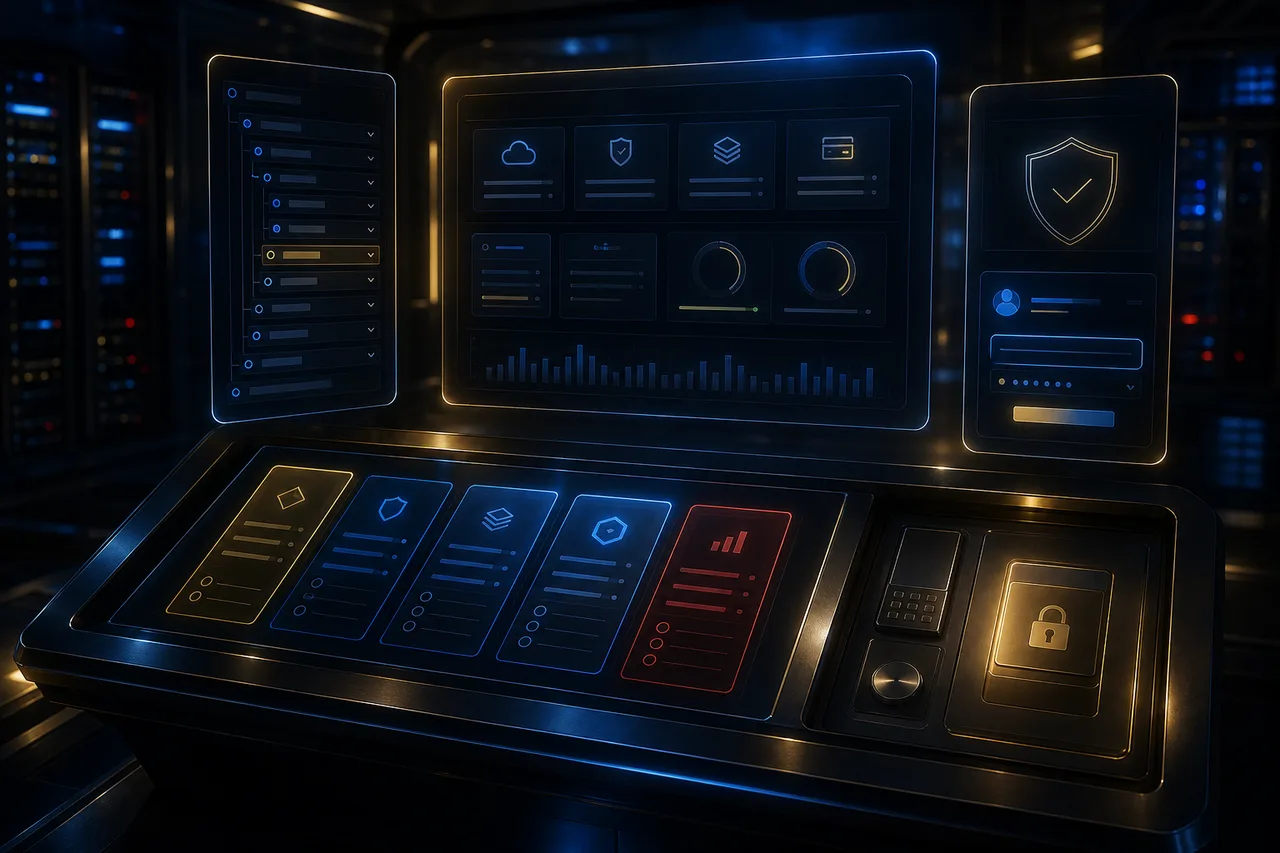
Login, entitlements, license requests, and subscription controls all belong in a clean customer-facing path - not buried in engineering notes or handled manually.

AO can start on a single machine, then graduate into production subscriptions and multi-site deployments with phased engineering rollout paths.
AlphaComm Computational is designed for teams that measure success in throughput, latency, traceability, and repeatable execution.






AlphaComm Computational is a broader AO library - core compute, orchestration, memory, transport, storage, and workload-ready layers like AO-SSQL™, AO-Storage™, AO-DSP™, AO-Video™, and AO-AGPU™ that can be adopted in stages to match your deployment path.





AO does not ask customers to replace CPUs and GPUs. It organizes how workloads are staged, scheduled, and monitored so teams can get more value from the infrastructure they already operate.
Think of AO as layered: an execution core, memory and transport services, reliability controls, and a clean developer surface. You choose how you plug in - as a managed service, a co-engineered platform, or a local deployment that runs next to your applications.
AO is software for standard servers, GPU workstations, and clustered environments. The goal is higher workload density, repeatable execution, and clearer rollout control on hardware teams already know how to buy, rack, cool, and monitor.
We start with the actual workload, validate fit against current infrastructure, and build a staged plan only if the results support it.
Prospects care about whether AO fits their workloads, operating model, and infrastructure priorities. Keep this section focused on how we validate fit, measure outcomes, and turn that into a production deployment plan.
We start with the actual compute problem, data shape, latency targets, and throughput goals so we can identify where AO is likely to matter.
A focused evaluation measures whether AO improves processing speed, resource usage, or infrastructure efficiency for the exact environment you care about.
If the evaluation proves out, we turn that result into a deployment plan with the right topology, milestones, and engineering support for production.
Best for teams that need to understand where AO should sit in the stack before they move into a formal pilot or evaluation.
Built for teams validating AO on a real server, cluster slice, or application path before they commit to a wider deployment.
For larger AO estates, regional deployments, and custom workload co-design where operations and deployment sequencing need tighter coordination.
The AO SDK lets teams test targeted workloads locally while staying in a structured review loop with AlphaComm. Evaluations are time-boxed and tied to a specific machine or cluster so results stay traceable.